
Introduction
A healthy menstrual cycle is essential for the reproductive health of women. Most women have regular periods which aids them in keeping track of hormonal changes in the body.
But in some cases, your period can get off track by days which indicates some underlying change in the body. Keep reading to know more about late periods.
What are the causes of a late period?
Although a late period can cause significant anxiety in women, it is most often associated with no serious underlying diseases. The cause of a late period include:
Extremes of reproductive age
With the onset of menarche, the first few menstrual cycles are unpredictable, irregular, and sometimes painful. This should not cause any health concerns in teenagers if their periods are ‘missed’ or late by some days.
As the age advances, the monthly cycle becomes regular as the body adapts to hormonal changes.
In a similar manner, the perimenopausal age is also associated with irregular, ‘missed’, or late periods. As the antral follicle count (ovarian reserve of eggs) decreases, the ovarian production of hormones and the feedback control on menstrual cycle disrupts.
The decreasing estrogen levels in the body cause a myriad of symptoms, hot flushes, vaginal dryness, insomnia, menstrual irregularities, to name but a few.
Pregnancy
In the anticipation of pregnancy, a late period can overwhelm you with happiness or immense anxiety if you’re not expecting one. Pregnancy is one of the most common causes of no bleeding on due dates.
But you’ll have to wait a little longer and get a pregnancy test to confirm it. Urine stick tests become positive as early as the first day of a missed period in women with a regular cycle.
Lifestyle changes
Certain lifestyle modifications can throw off the normal menstrual cycle:
Exercise
Heavy exercise can cause a missed menstrual period or cause them to stop altogether. This can often happen to women who are not physically active for a long period of time and abruptly starting a vigorous exercise or workout.
Menstrual irregularities are common in athletic women and are of no serious concern.
Exercise is not directly linked to the period cessation but is a stimulus of energy misbalance in the body. Heavy exercise leads to an increased gap in energy demand and supply which culminates as less energy available for other bodily processes and can thus delay or completely halt the menstrual cycle.
This, in the long-term, can severely impact the health and reproductive life of women, contributing to infertility.
Stress
Psychological stress can also affect the reproductive cycle of women and can result in delayed or missed periods.
Hypothalamus is the central regulator of almost all bodily functions. Chronic stress can tip the feedback mechanisms of reproductive hormones resulting in menstrual irregularities
Obesity and Weight loss
The excess fat stored in the adipose tissue ramps up the production of estrogen in the body. The increasing circulating levels of estrogen in obese women are mainly responsible for delayed or irregular periods.
Weight reduction is the first piece of advice given to women with abnormal menstrual cycles.
Contrary to this, women who are thin, lean, taking a low-calorie diet, fasting, or are exercising heavily to lose weight also suffer from irregular and delayed periods.
A healthy diet is essential for the normal functioning of the reproductive cycle.
Polycystic Ovarian Syndrome (PCOS)
PCOS is a gynecological condition in which the hormonal imbalance affects the overall health of a woman. The excess estrogen production by the cystic ovaries is the hallmark of PCOS.
This excess estrogen makes it difficult for the ovaries to release eggs, as they would do every month, to keep up with a healthy menstrual cycle. This leads to menstrual irregularities along with a list of other signs and symptoms.
Chronic Diseases
The diseases that run a long course also affect the menstrual cycle. Diabetes, Fibroids, Pelvic inflammatory disease (PID), Celiac disease, Von Willebrand disease, and malignancies are a few most notable chronic diseases that can cause menstrual irregularities.
Both type 1 and 2 diabetes mellitus can produce hormonal disturbances with disrupted blood sugar levels. Thus, poorly controlled diabetes mellitus can lead to late periods.
Pelvic Inflammatory disease (PID) involves the inflammation of reproductive organs that can also lead to menstrual irregularities.
Celiac disease is an inflammatory bowel disease that is exaggerated with gluten intake and disrupts the villus architecture of the intestine. This leads to impaired intestinal absorption of nutrients which contributes to late or missed periods.
Malignancies can induce a cachexic change in the body. Cachexia is the excessive loss of weight in cancer patients due to high cell turnover consuming a lot of body energy and speeding up the catabolism.
Decreased body energy levels lead to delayed periods or amenorrhea in some cases.
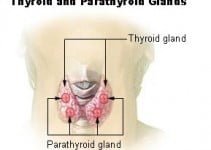
Thyroid Problems
Thyroid hormones drive the body’s metabolic process and maintain homeostasis. Both hyper- and hypothyroidism can cause late or missed periods.
The other symptoms of thyroid diseases are usually present long before the menstrual irregularities and reproductive dysfunction. Most of the cases resolve with treatment.
Birth Control methods
Hormones containing contraceptives downregulate the body production of reproductive hormones and thus changes in the menstrual cycle are observed on starting and stopping such birth control methods.
It may take up to 6 months for women to start bleeding regularly after stopping the hormonal contraception. Changes in the menstrual cycle are also observed with injectable and implanted contraceptive devices.
How to remedy the late period?
The management of late periods depends on the root cause. Nothing needs to be done in teenagers going through the first few reproductive cycles as their monthly cycles would become regular with time.
Avoid stressing your body with heavy workouts if you’re having menstrual problems. Stay hydrated and energetic to keep your body in balance.
Mental stress should also be avoided. Maintaining good sleep and limiting caffeine intake can help overcome insomnia that can help cope with stress.
Healthy body weight is essential to homeostasis of hormones in the body. Losing excessive weight gradually can restore the hormonal balance in the body and remedy the abnormal menstrual cycles.
Likewise, nourishing the body with healthy nutrients and fulfilling the daily calorie requirement is essential to avoid the energy-deprived state in the body.
For chronic diseases, such as PCOS, thyroid disorder, malignancies, etc., consult your doctor for prompt diagnosis and initiation of treatment. Menstrual irregularities often resolve after the treatment of underlying pathology.
Women using contraceptive methods often face abnormal uterine bleeding. Consult your OB-GYN if you’re facing menstrual irregularities with your contraception method.
References
- Bae, J., Park, S., & Kwon, J. W. (2018). Factors associated with menstrual cycle irregularity and menopause. BMC women’s health, 18(1), 36. doi:10.1186/s12905-018-0528-x
- Boyle, J. A., & Teede, H. J. (2014). Irregular menstrual cycles in a young woman. CMAJ : Canadian Medical Association journal = journal de l’Association medicale canadienne, 186(11), 850–852. doi:10.1503/cmaj.130667
- Harlow, S. D., & Paramsothy, P. (2011). Menstruation and the menopausal transition. Obstetrics and gynecology clinics of North America, 38(3), 595–607. doi:10.1016/j.ogc.2011.05.010
- Hoyer, J., Burmann, I., Kieseler, M. L., Vollrath, F., Hellrung, L., Arelin, K., … Sacher, J. (2013). Menstrual cycle phase modulates emotional conflict processing in women with and without premenstrual syndrome (PMS)–a pilot study. PloS one, 8(4), e59780. doi:10.1371/journal.pone.0059780
- Nagma, S., Kapoor, G., Bharti, R., Batra, A., Batra, A., Aggarwal, A., & Sablok, A. (2015). To evaluate the effect of perceived stress on menstrual function. Journal of clinical and diagnostic research : JCDR, 9(3), QC01–QC3. doi:10.7860/JCDR/2015/6906.5611
- Sher N. (1946). Delayed Menstruation: Causes and Treatment. British medical journal, 1(4444), 347–349.
- Yavangi, M., Amirzargar, M. A., Amirzargar, N., & Dadashpour, M. (2013). Does Ramadan fasting has any effects on menstrual cycles?. Iranian journal of reproductive medicine, 11(2), 145–150.

 Ali Anique holds an MBBS degree from the Nishtar Medical University and currently works as a doctor at Nishtar Hospital, the biggest hospital of south Punjab province in Pakistan.
I had my periods on the 4th of May then unprotected sex on my ovulation day. Now I have missed my period. Could I be pregnant? I don’t want to rush and take the test, i just don’t want to get my hopes up for nothing.
It is possible that you conceived. Wait to see if you’ll miss your next period before you get your hopes up.
it’s an update i still haven’t got my periods. i’m thinkin of buying a pregnancy test to check
Hi,my boyfriend and I had unprotected sex but only for a few minutes. I received my period April 18 which was 3 days late – I usually get it on the 15th of every month and now this month it is late again.I also do not have pregnancy symptoms, the last time we had unprotected sex was May 1 and he also did not finish in me.
Hello my last period was March 21,2016 which not normally because it was very light and heavy like normally. It lasted 5 days like normal. Then I haven’t had one at all in April and it the 5 th of May and s no sign of my period. I have taken 4 home pregnancy test and one at the hospital and they all were negative. I’m just confused as to what can be going on. I just wish it would come down or give me a positive so I can stop worrying.
Hello Mesha, Please stop worrying and taking stress since it is also a cause of missed or irregular period. Since your pregnancy tests have been negative it is highly possible that you are not pregnant. If you continue to not have your period for a longer time please consult a doctor.
My last period was on March 23 and now its 42 days; still no period.
If you’ve taken a pregnancy test and you’re not pregnant, you need to see a doctor to determine why you’re not menstruating.
I had my period on the 18th of March 2016. I had sex on my fertile days and now it’s the 22nd of April. I haven’t got my period yet, does that mean I’m pregnant or what? Please reply.
You can take a pregnancy test by May 1 to confirm if you’re pregnant.
I had my period march 17-24-2016, and now its may 1, but started spotting, I went in on march 25-16, took a pregnancy test, and the doc said it was positive, well two lines and one was a faint line, but confirmed I was pregnant. But I started to spot tonight. May 1-2016, I am confused!!!
More than likely you are pregnant. That’s how I found out that I was pregnant with my first child.
Hi my last period was Feb 25 and until now april 10, I have had no period yet.. Am i pregnant? thanks
Hi Myra, please take a pregnancy test.
Hi my name Desiree I’m just gonna get to the point Ok I always have my period between the 7th and 10th day of every month and this febuary leep year I had it the last week of week of February I’m 25
Hi Desiree, late periods can be because of many reasons like a sudden change n exercise or diet, or a new medicine or just because of hormonal changes. Nothing to worry about.
Hello my period was suppose too come on Febuary 26th 2016, I missed it. I did something on February 14th he claimed he nutted in me I didn’t believe him , but I took 2 different pregnancy tests they both said Negative. and now I’m about too take another one as soon as I wake up? #CommentsAnyone
I had my last period August 20,2015 have sex couple days after period ends when is likely I got pregnant …I’m now pregnant when am I due to have baby
Check out some conception calculators 🙂
I started my cycle Dec 31 2015 ended January 4,2016. My next cycle suppose started the 28 of january. Still nothing yet I don’t use protection with my husband. He doesn’t masturbate he pulls out. Do any body have any comments to say?
Hi, I had my period on 22/11/15 and had sex on my fertile days, I missed my period on December and now I am bleeding heavily. Is there anyone with a similar experience?
I started my period Dec 6,2015 and finished Dec 12,2 015 and I haven’t got my period I haven’t had sex so I don’t think I’m pregnant I’m a little stressed but I stress all the time and I never missed a period bc of it or is it not time yet. Plz message back.
I had my period on 10/17 had sex on my fertility day 10/31 period suppose to come on today 11/14 but no period yet..am I pregnant
My period is late I think so last period date is 30 Sept, I have a boyfriend, we sleep together but we never had sex sometimes he ejaculate on my trousers but we never sex, so is that possible I’m pregnant?
If you’re confident that you’re not pregnant then your period may be delayed because of other reason. This link will provide information that can help you http://womanjunction.com/missed-menstrual-cycle/
hi my last period was on the 10th september 2015 today on the 28th of october 2015 i saw pinkish when i wiped afterwards i went to the toilet again and this time i saw brownish (thick ) is it my period coming or something else going on?
Hello, It could be implantation bleeding if you had unprotected sex try taking a pregnancy test if your period did not show.
My last period was 9-21-15 it was due 10-19-15 I went to the doctor an they ran on test but came back negative but my period is 5 day late what should I do
Hi Briana, You could be stressed from worrying about your period and this could affect your period being late along with many other factors just wait out the month if it hasn’t returned by next month see your doctor again.