
So you’re trying to get pregnant, or at the very least, interested in knowing when your window of fertility begins and ends.
Determining your fertility window is the best way to increase your chance of conceiving.
Timing is everything if you’re trying to conceive, which is why the fertility calendar and calculator tool helps women get the best estimate of when their best chances of conceiving are.
Navigation
- Fertility Calculator & Calendar
- Overview
- How To Use The Calculator
- Using The Calendar
- Why Should You Use It
- Understanding ovulation
- How Does It Work
- Likelihood of Conception
- Other Ways To Determine Your Fertility
- Getting pregnant is not Impossible
Fertility Calculator & Calendar
Please provide the following details of your menstrual cycle and press the Calculate button to get your results below.
When did your last period start?
How many days did it last?
How long is your cycle?
Below are the results based on the information you provided:
Your next menstrual period is expected to start on
Your next most fertile period is from to
If you conceive within this timeframe, your estimated due date will be
- Pre-Period
- Period Days
- Post-Period
- Peak Ovulation
Please note that this is only an estimation of your menstrual cycle
Overview
Lots of couples are entirely in the dark regarding the length of time it generally takes to become pregnant. When you have focused your whole life preventing pregnancy, it is understandable to expect that pregnancy will occur soon after you have your last birth control pill.
However, a woman is only fertile for an average of six days during each monthly cycle and even if you correctly identify the fertile window, you will still find many barriers before sperm meets egg. There’s merely a 25 percent probability of conceiving each month at the ideal case situation.
If your age is 25, and you do not have a regular menstrual cycle, or do not have time to get regular sexual intercourse, your probability of conceiving each month will substantially be lower.
How To Use The Calculator
The fertility calculator will give you the drop-down options to select: When did your period last start? How many days did it last? And how long is your cycle? Once you select the correct data for these three options, click Calculate and the calculator will provide you with the results.
These results will give you the expected start date of your next menstrual period, the dates of your next more fertile period, and even your estimated due date if you manage to conceive within this time period.
Fertility Calendar
The fertility calendar will show your fertile period as well as an estimation of your menstrual cycle’s pattern. It is color-coded and broken up into pre-period, period, post-period, and peak ovulation days, which are highlighted on the calendar according to their designated colors.
You can even navigate between different months by clicking the arrows in the corners above the calendars to have a more extensive estimation of your fertility days and menstrual pattern.
The calendar will automatically show you the calendar for that month and the next. This feature is great for planning ahead, and gives users the chance to plan the times they have intercourse around their ovulation dates.
Why should you use it
The fertility calendar and calculator is a useful tool for women to time their ovulation periods. It helps women determine their fertile window, the days during a woman’s menstrual cycle where pregnancy is most likely to occur.
A woman can only get pregnant five days before ovulation through the day of ovulation. This is because male sperm have a lifespan of five days, and the lifespan of the ovum is only 24 hours. Having sex during this time period gives you the best chance of conceiving.
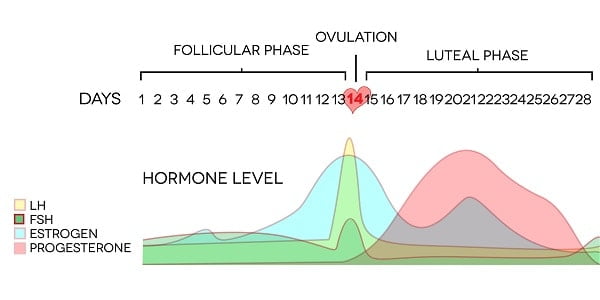
The fertility window calculator allows you to determine your fertility window by inputting the start of your last menstrual cycle, the duration of the period, and how long your cycle is on average. These allow women of all different cycle lengths and menstrual patterns to determine their window.
Fertility calculator can also work if you’re trying to avoid pregnancy. Estimating when your most fertile dates are is a good way of having an idea of where your body is.
Knowing your menstruation and ovulation patterns can help give you more control over what happens with your body, and let you plan accordingly.
Understanding ovulation
Ovulation is a process of an egg being released from the ovary and this occurs 12-16 days before the next period begins.
‘Fertile days’ will be the times during a woman’s menstrual cycle, few days before and a day after ovulation, when a woman has the highest capability to become pregnant.
There are lots of ovulation calculators available now that quote when your fertile period will happen. These calculators are a type of a calendar and operate on user data without studying anything regarding your hormone levels.
- Cycle lengths differ from woman to woman and cycle to cycle – almost 50 percent of menstrual cycles differ from 7 or more times.
- The time of ovulation may vary by a couple of days, even at regular cycles.
How does the calculator work?
The fertility calculator estimates your fertility window by tracking your ovulation periods. Ovulation is the time during your cycle when a mature egg is released from the ovaries and becomes available for fertilization.
By taking the length of your average menstrual cycle and the date of your menstruation, the calculator works out the time that ovulation is estimated to occur.
Ovulation typically happens about two weeks before the next menstrual period begins, so your ovulation will depend on the length of your average menstrual cycle.
The fertility calculator and calendar is the perfect tool for users to easily and quickly figure out their ovulation cycles. All you need to know is the simple facts about your menstrual cycle, and the calculator will give you an accurate estimate of your window of fertility while the calendar will help lay it all out there for you to see, month by month.
Likelihood of Conception
After the fertility window closes, the likelihood of conceiving will decrease significantly. By anytime between 12-24 hours after ovulation occurs, you will no longer be able to get pregnant during that cycle for the month. Using the fertility calendar and calculator will optimize your chances of getting pregnant.

Are there others way to determine your fertility?
The fertility calculator and calendar is not the only way to determine your ovulation period. There are other ways of knowing what day of your cycle that ovulation occurs by observing your fertility signs and recording them.
Women’s cycles vary and are not always regular. Keeping a look out for fertility signs is a good way of determining your ovulation. Signs include changes in your vagina’s mucus, which can become clear, slick and slippery during ovulation.
Ovulation predictor kits also work accurately, as well as recording your basal body temperature to pinpoint at which point your ovulation has passed, paving the way for future records of ovulation.
Using the fertility calculator and calendar on this side is definitely a quick and simple way to gauge your fertility window accurately. As long as you know the date of your last period and the duration of your menstrual cycle regularly, then the site’s tool will give you an estimated fertility window and predicted date when your ovulation will occur.
If you’re looking to get pregnant, the best possible way to determine the timing is to calculate your fertility window and have intercourse within the 6 days leading up to ovulation and on the day that ovulation occurs.
Getting pregnant is not Impossible
Do not worry if you didn’t become pregnant even after a few months of trying. In spite of a suitable plan, the probability of becoming pregnant in a cycle is just about 20 percent.
Stressing out about this makes pregnancy much less probable. Keep away from stress. Try to appreciate your own life. Exercise. Unwind.
Physicians use the expression “inability to conceive” or “Subfertility” after two years of unprotected sexual activity. Keep trying and ask your gynecologist about taking additional steps.
References
-
1. Clarke, J. F., van Rumste, M. M., Farquhar, C. M., Johnson, N. P., Mol, B. W., & Herbison, P. (2010). Measuring outcomes in fertility trials: can we rely on clinical pregnancy rates?. Fertility and sterility, 94(5), 1647-1651.
2. Donnez, J., Dolmans, M. M., Pellicer, A., Diaz-Garcia, C., Ernst, E., Macklon, K. T., & Andersen, C. Y. (2015). Fertility preservation for age-related fertility decline. The Lancet, 385(9967), 506-507.
3. Urrutia, R. P., Polis, C. B., Jensen, E. T., Greene, M. E., Kennedy, E., & Stanford, J. B. (2018). Effectiveness of Fertility Awareness–Based Methods for Pregnancy Prevention: A Systematic Review. Obstetrics & Gynecology, 132(3), 591-604.
4. Smits, K., Nelis, H., Van Steendam, K., Govaere, J., Roels, K., Ververs, C., … & Van Soom, A. (2017). Proteome of equine oviducal fluid: effects of ovulation and pregnancy. Reproduction, Fertility and Development, 29(6), 1085-1095.
5. Massenkeil, G., Alexander, T., Rosen, O., Dörken, B., Burmester, G., Radbruch, A., … & Arnold, R. (2016). Long-term follow-up of fertility and pregnancy in autoimmune diseases after autologous haematopoietic stem cell transplantation. Rheumatology international, 36(11), 1563-1568.
6. Davis, I. (2018). The experimental conception hospital: dating pregnancy and the gothic imagination. Social History of Medicine.



Hi I had my mensese on 26th July,had sex from 4th-11th August but now I am having PMS , what will I do,I want to be pregnant please.
Hi Angela, It seems that you had intercourse during the ideal time, your fertile period. PMS symptoms can sometimes be confused with pregnancy symptoms. Wait until after you are supposed to get your period, if you don’t then take a pregnancy test. Good Luck!
I had sex today and it’s my 1st day of fertility. Will I be able to conceive?
Hello Mildred, you should stand a high chance of conception at this time.
Hi!! My period started on June 26th of 2018!! It last 4 days. I have had sex on the July 4 & 6!! Could I have concieved during this time?
Hi Zia, based on a 28 day cycle, you would have been fertile from July 8th to the 12th. If you have a shorter or longer cycle it could vary. You’ll have to wait until your period to determine at that point if you conceived.
Hi!! My period started on July 9th of 2018!! It last 5 days. I have had sex on the 19, 20,21, 22!! Could I have concieved during this time?
Hello Heather, yes, the occurrence of unprotected sex does result in pregnancy.
Period was June 22nd. Lasted 6 days. I had unprotected sex on both days July6 & 7th. Being they’re both my ovulation days. What’s the probability of me being pregnant?
Hello Kotton, there is a high possibility that you might have conceived.
Hi, my last period was June 13th, and my husband and I made love June 25th. I’m I pregnant?. Thank you, Apols
Hello Apols, yes you might be.
Hi. My expected menstruation is this week. When will i take my pregnancy test.
Hi Adi, I would take one at least 2-3 days after your period was scheduled to begin. Good luck!
My last day period is on the 29th of may and i had sex last 8th of june, as of this time I do not have my preiod yet do think i’m pregnant?
Hi Casey, assuming that the first day of your period was somewhere around the 24th (which when calculating fertility periods and cycle length is what we use, the first day of your last period because that’s the beginning of a cycle), June 4th through the 8th would have been your fertile period and you would have seen your next period around the 22nd based on a 28 day cycle, you could be pregnant. I would take a test.
If I had unprotected sex on 25 june 2018 are there any chances of becoming pregnant. 5 days before the next periods start?
Hi Daisy, generally not 5 days before your next period. You wouldn’t be in your fertile period, you would be outside that window so most likely not.
My period start on April 1, May 22 and June 15 how many days is my menstral cycle and which day is my Ovulation. My period last just for 2days but is consistent every month please help
Hello Susan, use the below link to help you with this:
https://womanjunction.com/
Hi! I have no baby yet and I had period last May 9 and my expected period on june 4 or 6 but until this day, my period Haven’t come yet. I’ll try to use the test but its negative. What is that means?
Hello Maria, if you think you are pregnant, then should you take a pregnancy test 7 days after a missed period.
Hi, I had my period in March 15,16,17,18,19, April 10,11,12,13,14, may 8,9,10, June 4,5,6, pls how days is my menstrual cycle
Hi Cecilia, ROughly a 27 day cycle as it averages between 26-28 days.
I was thinking my period last start in April 2,then until April 6 last day.and then my period this may 28,.I don’t know what happen its possible I am pregnant?
Hello Jhien, this is hard to determine virtually, the best time to test for pregnancy is 7 days after a missed period.
Hi I am having 2 daughters already and I am planning for a baby boy.Is it possible to give birthto a baby boy without having sex.plese tell
Hi Rashmi, maybe I’m confused, but unless you are doing IVF, you need to have sex in order to get pregnant with a boy or girl.
It is light bleeding bright redish pink but when I pee clots come out .
Selena, sounds like a regular period honestly. A few days plus or minus is nothing to worry about.
Hey I had my period March 26th and I had sex on April 5, 6,7,8, and 9. My next period is due April 24 but yesterday on April 20th I was having brown discharge now it’s april 21 and I’m bleeding. What could this mean that I am bleeding 4 days than expected?
Hi Selena, based on the days that you had sex, you could have been pregnant. Is the bleeding “normal” for you? As heavy or is it lighter and spotting. If the later is there case then you could have implantation bleeding. Otherwise, yes you could get your period earlier than expected. It happens every once in a while due to changes in life, stress, medication, weight changes etc.