
Most people worry about weight gain for two main reasons, their appearance, and health. Aside from affecting one’s self-esteem, too much weight will increase the risk of developing conditions such as Type 2 diabetes, cancer, heart disease, and others.
So, can weight gain affect your menstrual cycle? The simple answer is yes, body weight can also have an impact on your reproductive health which includes your menstrual cycle. Keep reading to know more.
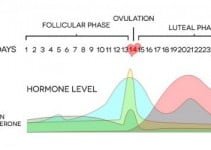
All women of reproductive age have a 28-day menstrual cycle which involves a rollercoaster of emotions and cyclic hormonal changes. The cycle commences with the start of bleeding to indicate that you’re not pregnant, yet.
However, you might not have this experience every month if something interrupts your cycle. For instance, you could realize that your period is late and yet you are not pregnant. This can happen for a number of reasons, but weight gain is the main one.
If you find that you have gained a lot of weight in recent months, then this could affect the regularity of your period. Estrogen is the female hormone that plays an important role in the thickening of the uterine wall in order to make it ready for the attachment of a growing fetus.
If you are obese or overweight, the excess fat is stored in adipose tissue throughout the body which ramps up the production of estrone, a type of estrogen. The excess estrogen will cause hormonal imbalances and result in irregular or heavy periods.
Your menstrual cycle can get back on track for you to either have a normal period or get pregnant if you lose even five percent of the body fat. This will happen because fewer fat cells secrete fewer hormones, which is one of the main causes of abnormal or irregular periods.
It is also worth mentioning that being overweight could affect your cycle if you are struggling with issues related to PCOS or Polycystic ovary syndrome.
This is for the simple reason that women who have PCOS seem to be more resistant to insulin. Once you reduce the number of fat cells which produce hormones to block ovulation, the seriousness of your irregular periods might be lowered as well.
The menstrual cycle has a delicate balance, hence it’s always good to know that gaining or losing a significant amount of weight or even excessive exercising can have an impact on your hormone production, especially estrogen.
In addition to that, improper hypothalamic functioning can potentially change the length and regularity of your menstrual periods.
Image: Pixabay


Hi I’m 16 years old. I’ve had my period for 4 years already and for january I had it 2 times in a month. In february i finished on the 6th. i noticed blood on my pants and when i went to changing there was light blood.
Hi Melani, It’s quite possible if you have your period early enough in the month, say the 1st, and then you have 28 day cycle to get it again at the end of the month lasting into early the next month.
I was supposed to start on the 5th or November and didn’t start till the 15 and the following month I didn’t start till the 25 and now it’s been almost a month and a half and I haven’t started yet and I’m 16 and don’t know what to really think. I’m not sexually active but I tried to talk to my mom and she didn’t listen to me. I have gained about 50 pounds in the last 6 months though. Please help
Hi Taylor! I know at that age, when things happen you can definitely be concerned, especially when you think others aren’t listening. Weight gain can most certainly have a significant affect on your period. If you aren’t sexually active then you have to think about other things. Rapid weight gain can cause your periods to become longer in between cycles or even stop. If you aren’t doing anything different and gaining weight and even if you are, I would recommend asking your mom to help you out and make an appointment with your doctor to get some testing done, or even go to a planned parenthood where they offer a multitude of resources to young adults (trust me from experience I know). Maybe bring your mom with you to an appointment to discuss things with you and the doctor together. I wish you luck and hope you can find answers.
My name is Grace I miss my period about 3 three years ago now I’m over weight, I don’t know maybe it’s due to my missing period that I’m over weight.
Hello Loto, no it might be the other way around. You might be missing your period as a result of being over weight. Please read the following article: https://womanjunction.com/8-mess-period/
Hey can u please help me my periods are usually everyday and I’m scared to tell my mom anything and this has been going on since I got it about 2 and a half years ago and I’m 13 years old and I’ve been doing as much research as I can and I also notice that sometimes there seems to be a strong fishy odor and I don’t know what to do can someone help me please and please just please don’t tell me to tell my mom or go to the doctors
Hello Hellen, I strongly advise that you speak to your mom or at least see a doctor to determine what is happening with you as this very unusual.
I got my period 3 years ago but for the past year and a half it’s been irregular because of weight gain I am 210lbs, and I haven’t had mine in over 2 months but before that it was regular (ish) for about a year. I am not sexually active and I have lost 15lbs since my last cycle and I am currently exercising almost daily in sports. I’m going in to see a doctor soon but I still don’t understand why it would have stopped so suddenly.
Hello Emma, you are doing the right thing. See your doctor for a check up. Please note that too much exercise can cause this.
Last year I did surgery I am 39, I stopped periods. I have a little heart problem. After six month I was diagnosed with being hypothyroid. Now I’m 87 kg. How I should reduce my weight?
Hi there Jancy, try as best as possible to change your diet, reduce stress and incorporate exercise in your daily routine.
I gained 3 kg in a month.. I was underweight but now I am 48.6 kg. I didn’t get my periods and 10 days late. I do have barely high tsh but t3/t4 are in limits. What could be wrong.
Hello there Cris, please see your doctor for thorough assessment.
Hey I started my period 1 1/2 years ago and I know I have gained a couple of pound in the past year. Can this be why my period is 2 1/2 months late?? Please help!
Hi there Lana, please see your doctor about the absence of your period for over 2 months and also do a pregnancy test to rule out any chances of you currently being pregnant.
I never had my period in almost 2 months. I have not been havin’g my cravings. Ive been going to the gym did some physical activity. But it turns out that ive gained a few lbs. I took lots of pregnancy test regarding that im not pregnant. Never felt any nautious or breast tender. I even changed my diet by eatin more fruits adn veg at this point i really don’t know what’s goin on. I dont when i am starting my period. Im seriously in need of help
Hi Lebogang Nelly, the condition you are having is definitely not normal. You should visit a doctor immediately to point you to the right direction. Regards
Hello I was 210lbs and now I’m 276lbs I haven’t had a period in almost 2 years and now my period just came back on Tuesday now that I came back on my period will I lose this weight because it’s like all this weight build up like over nite I have been exercising and it will not fall off for nothing so now that my period started back up will I lose this weight.
I have gained 15 kg in a year and since then I’m having issues with my periods. It was always regular,never a day late I was always overweight but now it’s been a year and it’s not getting back to normal! I saw a doctor too and did a three months course.Those 3 months my period were normal and on the exact date. And yet again I’m a week late. I guess I’m still gaining weight due to this irregular cycle. Please help out!
Have your doctor check to see if your thyroid is functioning normally.
I’ve gained 7 lbs in 1 week. I cant stop eating!! Why do women like myself get so hungry when their period is coming?
I have not see my periods since 2 months. Doctor says it is due to being overweight.
Age 19
Height 5.7ft
Weight 86 kg
But I seriously don’t eat much.
In the beginning of my maturity, it was too irregular and mom said its common in starting. I guess due to that I am overweight.
I concerned doctor for that. She gave a course for 3 months and those 3 months my periods were regular. I lost 3 kgs due to regular periods. Now it is been 2 months course is done and I have seen periods. Sad that due to delay, I have gained additional 4 kgs weight!!!
I gained 20lbs in the last year — from 105lbs to 125lbs. My period went from a predictable 23 day cycle to now apparently 27 day cycle. I’m not talking about obesity or anorexia (extremes) but am wondering if there is a link between weight gain and longer cycles (and vice-versa)?
Hello Lynn, I think the right thing to do is talk to your doctor.
I’ve gained weight in one month from 125 to 156 and in that one month I’ve had my menstrual period two times in the month. The first one started 2nd of June and finished the 5th and then came again the 18th of June and finished the 21st of June. Can you please tell me what’s wrong?
Hi Georgia. Having two periods in a month may be caused by imbalances with your hormones or other issues. Please read this useful post – it will help you to put things into perspective http://womanjunction.com/menstrual-cycles-month/
I have gained weight from 2011 I was wearing size 30-34. I am 21 and this is the 2nd year I haven’t seen my period.
But I don’t understand why
Please help me.
Are you saying you haven’t seen your period in 2 years??? Please see a doctor ASAP! That is not normal at all, something isn’t right. No one should miss their period for that long and you need to see a doctor right away and find out exactly what’s happening. Blogs wont be able to give you that reason because it will be specific to you and what’s happening in your body and only a doctor can know what’s causing this because he/she will have to run some tests to find out what is happening. Please set an appointment NOW!
i haven’t seen my period in two months, but i have gain weight. could that be anything normal